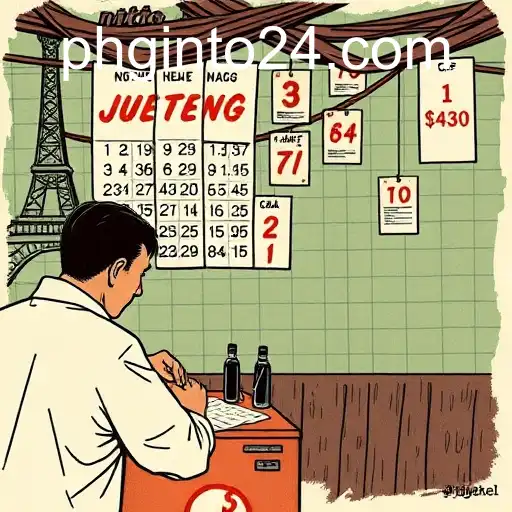
Understanding Jueteng: A Deep Dive into Its Impact and Operations
Jueteng, a popular but illicit numbers game, has been an integral part of Filipino culture for decades. Despite its illegal status, jueteng continues to thrive, cloaked under a veil of complexity and socio-economic factors that make it a persistent presence in many communities across the Philippines.
The Origins of Jueteng
Jueteng traces its roots back to the colonial period, introduced by the Chinese immigrants. Derived from the words "hueteng" and "gue," which mean "flower" and "bet" respectively, this game began as a simple form of entertainment. It has evolved over time, transforming into a widespread phenomenon that challenges government control efforts.
How Jueteng Works
The mechanics of jueteng are straightforward yet involve a complex network of players and operators. Participants choose a combination of numbers and place their bets through a kubrador, or bet collector. These bets are aggregated and passed up through a hierarchy of coordinators, leading to the jueteng lords who operate and manage these illegal networks.slotgame
Phginto: The Hidden Network
Sitting at the heart of jueteng's success is the term phginto, which loosely translates to the intricate web of connections that keep the machine running. Phginto is not just a network but a microcosm of transactions involving payoffs, protection, and manipulation. It is this phginto that allows jueteng to operate unnoticed and unchecked in many rural and urban areas.bmy77
Subverting the System
One significant aspect of phginto is its ability to subvert the system through corruption and bribery. Law enforcement agencies often find themselves entangled in this web, with reports of police officers and public officials being on the payroll of jueteng lords to turn a blind eye to operations. This underground protection extends to crisis management whenever the government cracks down on illegal gambling.
Socio-Economic Impacts of Jueteng
Jueteng’s presence in society has far-reaching socio-economic effects. For many impoverished Filipinos, it represents a source of hope and potential escape from poverty. Betting a few pesos can sometimes yield a substantial return, making it an enticing option for those in financial despair. However, it perpetuates a cycle of gambling dependency that can ruin families and destabilize communities.
The Economic Microcosm
Despite being illegal, jueteng contributes significantly to local economies. The winnings are often recycled into local businesses, and the widescale operation provides numerous jobs – from the bet collectors to the coordinators. This economic microcosm can also translate into political leverage, with jueteng lords extending support to political candidates who promise to safeguard their interests.
The Struggle with Legalization
The persistent nature of jueteng has led to debates about its legalization. Proponents argue that legalizing and regulating the numbers game could help curb the illegal practices, generate government revenue through taxes, and allow for safer gambling practices. However, opponents fear that legalization might increase gambling addiction and erode moral values.
Comparisons to Other Forms of Gambling
Jueteng often draws comparisons to legal forms of gambling such as lotteries. Despite its similarities to state-sanctioned lotteries, the argument often circles back to its deeply ingrained illicit nature due to the phginto network and its implications. Proponents for legalization suggest that a well-regulated system could mimic successful models seen in other countries.Playtime
Challenges Facing Elimination
Efforts to eradicate jueteng have historically faced numerous challenges. The complex phginto network, systemic corruption, and societal reliance present obstacles that are not easily overcome. Numerous government initiatives aimed at eliminating jueteng have been launched over the years, but with little success. The challenges arise from the intricate interplay of cultural acceptance, economic dependence, and institutional corruption.
A Cultural Dilemma
At the heart of the battle against jueteng lies the cultural acceptance of gambling as a way of life. For many Filipinos, it is viewed less as a crime and more as a social activity. This cultural nuance adds another layer of complexity in addressing the issue and implementing comprehensive reforms.66jl
The Future of Jueteng
Despite various efforts to curtail jueteng, its future remains uncertain. As long as the socio-economic factors that sustain its existence continue, jueteng is likely to persist. The challenge lies in finding a balance between regulation, cultural acceptance, and economic dependency to forge a path forward that minimizes harm while considering local realities.linebet
For more information on this and other related topics, visit our homepage.